
The notion of photographs as unvarnished windows onto reality has long been contested.
It has been said that photographs are an artificial construct, an artifice¹, and so the question arises as to how much of a record any photograph is as a document of truth. I contend that it cannot really be true, unless of course you regard truth as subjective.
The creation of any photograph involves a series of choices which include viewpoint, timing, lens selection and image format. These decisions, along with the photographer’s perspective and potential bias, significantly shape the final image. Add context and presentation into the mix and it becomes clear how the viewer can be presented with a very specific statement which may or may not reflect an objective reality. Familiar territory to any student of photography.
Photography has also been variously described as “a heterogeneous complex of codes”² and “neither creation nor memory, but documents”³.
I’m drawn to photography’s semiotic potential and as a document of information open to significant subjectivity and, at times, misrepresentation. These aspects become particularly relevant in fields such as photojournalism, documentary photography and forensic images where ethics and accuracy are paramount – but is also interesting to explore on a more general level.
When one releases the camera shutter on a scene, a kind of facsimile of the world is created in two dimensions. But however much one wishes, it can only be considered as an interpretation, shaped by the photographer’s eye and intent or perhaps to prompt a story constructed by the viewer’s perspective.
PJ, 2023
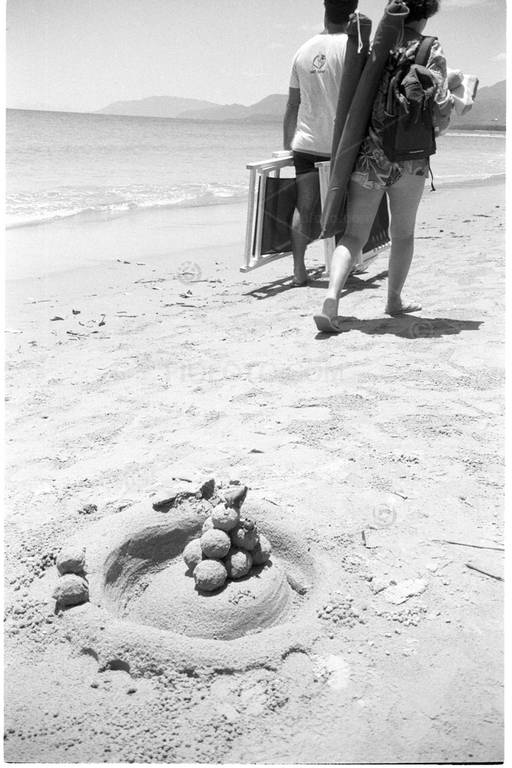
1. David Hockney (UK & USA) has several critical comments on photography, referring to it as a limitation or artifice.
“On Photography” by Susan Sontag, 1977, USA.
2. Burgin, Victor (1982b): ‘Looking at Photographs’. In Burgin (Ed.), op. cit., pp. 142-153
3. Takuma Nakahira “The Illusion Called the Documentary: From the Document to the Monument,” published 1972, Japan.