

A life of factual precision as a photo documentarian still comes through in many of Peter’s images, but his primary motive these days involves exploring more contemplative visual narratives.
Embedded in the NSW Southern Highlands’ natural, urban and social landscapes, his work examines the symbolic textures of ordinary life, inviting viewers to appreciate the mundane — a focus evident in the “High Place” project.
His current black and white images frequently embrace imperfection, often using simple equipment to produce raw photographic sketches that capture the commonplace with an immediate, unrefined feel. Presented as a record in single or multiple frame picture posts, and the occasional photo series.
“A universe in miniature existed within my childhood home, hidden in numerous packets of my father’s 2¼-inch square black and white negatives. Tucked away in a cupboard, forgotten and rarely printed, these reversed black and white tones fuelled an intense curiosity when held up to the light. Each frame posing a fundamental question: who, where, why?
This early exploration of unseen histories and mysterious moments established photography as my core method for engaging with the world, acting as a vital mechanism for understanding and interpretation” – PJ
Now based in New South Wales, Australia PJ’s photographic journey began as a youngster in late 1960s South Wales, United Kingdom.
Having been gifted an old Olympus rangefinder camera he proceeded to photograph anything that came his way on the streets, developing an awareness of commonplace details which remains with him to this day. Studying photography at Swansea College of Art was followed by 25 years in London working professionally in applied photo imaging.
Past representation was through Planet Earth Pictures, London (now sadly long gone) and Peter has previously supplied images to Octopus Publishing Group, London (Fauna Britannica), Hodder & Stoughton, Marie Claire and a range of other magazines and publishers.
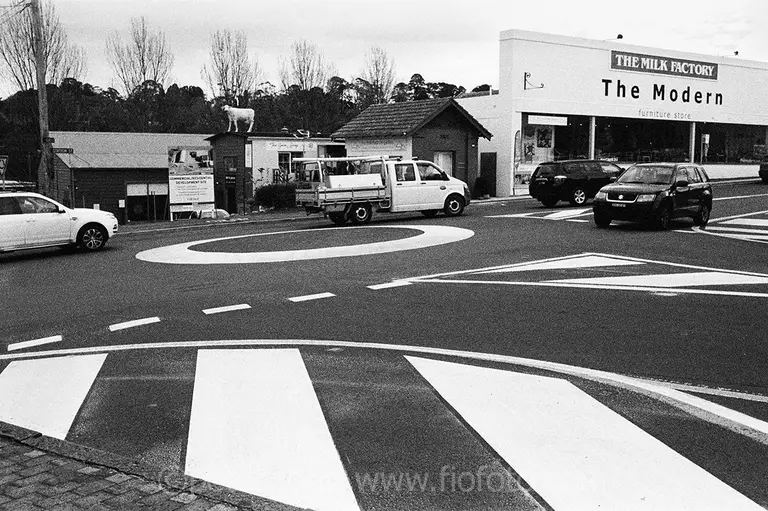
The digitisation of an extensive archive of negatives and transparencies is currently underway. As this process continues, additional images will be uploaded to fiofoto.com and made available for purchase as prints or licensing.
Abstract
It has been said that photographs are an artificial construct, an artifice¹, and so the question arises as to how much of a record any photograph is as a document of truth. I contend that it cannot really be true, unless of course you regard truth as subjective.
The creation of any photograph involves a series of choices which include viewpoint, timing, lens selection and image format. These decisions, along with the photographer’s perspective and potential bias, significantly shape the final image. Add context and presentation into the mix and it becomes clear how the viewer can be presented with a very specific statement which may or may not reflect an objective reality. Familiar territory to any student of photography.
Photography has also been variously described as “a heterogeneous complex of codes”² and “neither creation nor memory, but documents”³.
I’m drawn to photography’s semiotic potential and as a document of information open to significant subjectivity and, at times, misrepresentation. These aspects become particularly relevant in fields such as photojournalism, documentary photography and forensic images where ethics and accuracy are paramount – but is also interesting to explore on a more general level.
When one releases the camera shutter on a scene, a kind of facsimile of the world is created in two dimensions. But however much one wishes, it can only be considered as an interpretation, shaped by the photographer’s eye and intent or perhaps to prompt a story constructed by the viewer’s perspective.
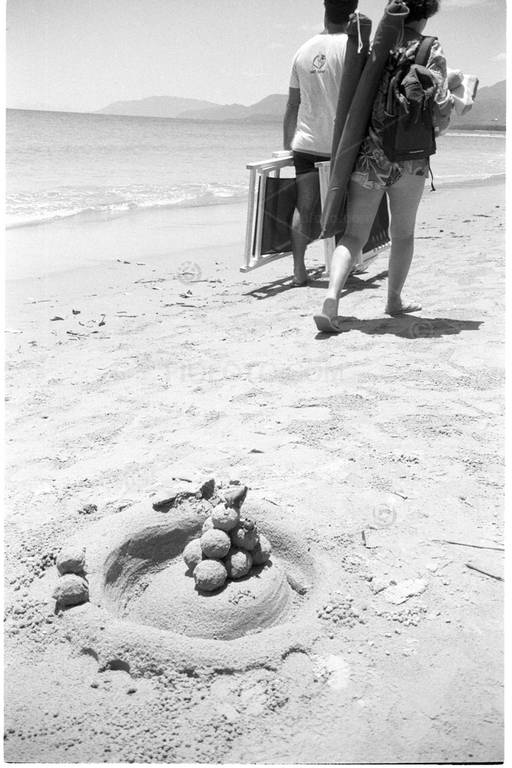
1. David Hockney (UK & USA) has several critical comments on photography, referring to it as a limitation or artifice.
“On Photography” by Susan Sontag, 1977, USA.
2. Burgin, Victor (1982b): ‘Looking at Photographs’. In Burgin (Ed.), op. cit., pp. 142-153
3. Takuma Nakahira “The Illusion Called the Documentary: From the Document to the Monument,” published 1972, Japan.